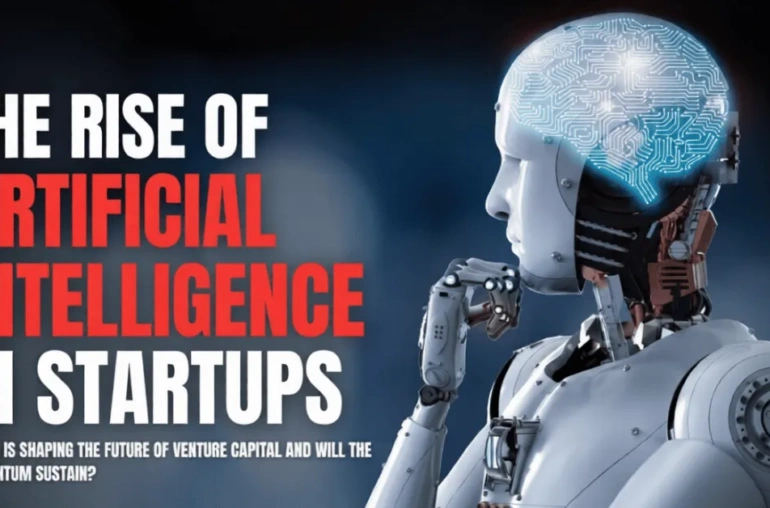

Innovation is no longer driven by intuition alone. In modern businesses, data, speed, and adaptability determine who leads and who falls behind. This is why AI’s role in business innovation has become central to how companies design products, improve processes, and compete in global markets.
Artificial intelligence is not just a support tool. It is a core innovation engine that reshapes how businesses experiment, decide, and scale. This article explains AI’s role in business innovation, focusing on real mechanisms, firm-level impact, and why companies that fail to integrate AI struggle to keep up.
What Business Innovation Really Means Today
Business innovation is not limited to new products. It includes:
- Process innovation
- Business model innovation
- Organizational innovation
- Customer experience innovation
- Data-driven decision innovation
AI influences all of these areas. Understanding AI’s role in business innovation means understanding how intelligence is embedded into daily operations, not just R&D labs.
Why AI Has Become a Core Innovation Driver
Traditional innovation relied on:
- Long development cycles
- Manual research
- Trial-and-error experimentation
AI changes this by enabling:
- Faster experimentation
- Continuous learning
- Scalable insight generation
- Predictive decision-making
This shift explains why AI is now central to competitive advantage across industries.
AI’s Role in Business Innovation: The Core Mechanisms
Let’s break down how AI actually drives innovation inside businesses.
1. AI Accelerates Idea Generation and Opportunity Discovery
Innovation starts with ideas, but identifying the right ideas is difficult.
AI supports innovation by:
- Analyzing market trends
- Detecting unmet customer needs
- Identifying gaps in existing offerings
- Processing large datasets for insight
Instead of relying purely on brainstorming, companies use AI to surface high-potential opportunities faster.
2. AI Transforms Product and Service Innovation
Product innovation benefits directly from AI.
AI enables businesses to:
- Analyze user behavior in real time
- Optimize features based on usage patterns
- Predict customer preferences
- Reduce product failure rates
This data-driven approach shortens development cycles and improves product-market fit.
3. AI Drives Process Innovation and Efficiency
One of the most overlooked aspects of AI’s role in business innovation is process transformation.
AI improves internal processes by:
- Automating repetitive tasks
- Optimizing workflows
- Reducing operational errors
- Improving coordination across teams
Process innovation often delivers faster ROI than new product launches.
4. AI Enables Business Model Innovation
AI does not just improve existing models. It creates new ones.
Examples include:
- Subscription-based services
- Usage-based pricing
- AI-as-a-service platforms
- Data-driven marketplaces
Many modern business models are only viable because AI reduces cost and increases scalability.
5. AI Enhances Customer-Centric Innovation
Customer expectations evolve quickly.
AI helps businesses innovate around customers by:
- Personalizing experiences at scale
- Predicting customer needs
- Improving customer journey design
- Reducing friction in service delivery
Customer-centric innovation powered by AI increases retention and lifetime value.
6. AI Improves Decision-Making and Strategic Innovation
Innovation requires good decisions.
AI supports strategic innovation by:
- Analyzing multiple scenarios
- Forecasting outcomes
- Reducing bias in decision-making
- Highlighting hidden risks and opportunities
This improves the quality and speed of strategic choices.
7. AI Increases Innovation Speed and Experimentation
Speed is a competitive weapon.
AI enables:
- Rapid A/B testing
- Continuous experimentation
- Real-time feedback loops
Faster learning cycles allow companies to innovate more frequently and with less risk.
8. AI Democratizes Innovation Inside Organizations
Innovation was once confined to specialized teams.
AI expands innovation by:
- Giving non-technical teams access to insights
- Automating analysis tasks
- Lowering skill barriers
This allows innovation to emerge across departments, not just R&D.
AI’s Role in Business Innovation Across Key Functions
To fully understand AI’s role in business innovation, we need to look at how it affects core business functions.
AI in Marketing Innovation
AI transforms marketing by:
- Predicting customer behavior
- Optimizing campaigns
- Automating content personalization
- Improving attribution modeling
Marketing becomes an experimentation-driven innovation engine.
AI in Sales Innovation
Sales innovation includes:
- Predictive lead scoring
- Automated follow-ups
- Dynamic pricing strategies
AI improves conversion rates and revenue efficiency.
AI in Operations and Supply Chain Innovation
AI optimizes:
- Demand forecasting
- Inventory management
- Logistics routing
- Supplier coordination
Operational innovation reduces cost and improves resilience.
AI in Finance and Risk Innovation
AI enables:
- Real-time risk assessment
- Financial forecasting
- Fraud detection
- Capital allocation optimization
This improves financial stability and strategic flexibility.
Competitive Advantage and AI-Driven Innovation
AI-driven innovation creates durable advantages.
Companies that integrate AI effectively:
- Innovate faster
- Scale more efficiently
- Adapt quicker to market changes
- Outperform competitors
Research organizations such as McKinsey & Company consistently highlight AI-driven innovation as a top driver of long-term business performance.
Why Some Companies Fail at AI-Driven Innovation
Not all AI initiatives succeed.
Common failure reasons include:
- Treating AI as a standalone tool
- Poor data quality
- Lack of organizational change
- Weak leadership alignment
AI’s role in business innovation depends on integration, not adoption alone.
Organizational Change: The Missing Innovation Layer
True innovation requires organizational alignment.
Successful AI-driven innovators:
- Redesign workflows
- Upskill employees
- Encourage experimentation
- Support cross-functional collaboration
Without this, AI delivers limited innovation impact.
Risks and Limits of AI in Business Innovation
AI is powerful, but not flawless.
Key Risks
- Over-automation
- Algorithmic bias
- Loss of human creativity
- Over-reliance on data
AI should support innovation, not constrain it.
The Human Role in AI-Driven Innovation
AI enhances, but does not replace:
- Creativity
- Vision
- Ethical judgment
- Leadership
The most successful innovators combine human insight with AI intelligence.
The Future of AI’s Role in Business Innovation
Looking ahead, AI will:
- Become embedded in core operations
- Enable continuous innovation cycles
- Shorten time-to-market further
- Intensify competition across industries
Innovation will become less episodic and more continuous.
What Most Articles Get Wrong
Most content fails because it:
- Focuses only on tools
- Ignores process and culture
- Overhypes AI capabilities
- Avoids discussing limits
Real innovation is systemic, not technical.
Frequently Asked Questions
How does AI support business innovation?
By improving decision-making, accelerating experimentation, and enabling new products, processes, and business models.
Can small businesses use AI for innovation?
Yes. AI lowers innovation costs and reduces reliance on large teams.
Does AI replace human creativity?
No. It enhances creativity by removing execution friction.
Final Conclusion
So, AI’s role in business innovation is transformative.
AI acts as an innovation multiplier. It accelerates idea generation, improves execution, enables new business models, and allows companies to innovate continuously rather than occasionally. When paired with strong leadership and organizational change, AI becomes a core engine of long-term growth.
Innovation is no longer just about ideas.
It’s about intelligence, speed, and learning.
And AI is now at the center of all three.