Artificial intelligence is no longer a future promise in the United States. It is already reshaping productivity, labor markets, business models, and national competitiveness. Understanding how AI is impacting the US economy requires looking beyond headlines and into how AI is changing output, jobs, wages, investment, and economic structure in real time.
From Wall Street to healthcare, from manufacturing to logistics, AI is now embedded in the economic engine of the United States. This article explains how AI is impacting the US economy, using concrete mechanisms, sector-level insights, and economic realities that most discussions ignore.
What Does AI Mean for the US Economy?
In economic terms, AI refers to machine learning, automation, data analytics, and intelligent systems that can perform tasks traditionally done by humans or enhance human productivity.
In the US economy, AI affects:
- Productivity growth
- Labor demand and job composition
- Business investment
- Innovation and competitiveness
- Income distribution
These forces together define how AI is impacting the US economy at scale.
How AI Is Impacting the US Economy Today
AI’s impact is already measurable. It is not speculative.
1. AI Is Increasing Productivity Across Industries
Productivity growth has been a long-standing challenge for the US economy. AI is changing that.
AI boosts productivity by:
- Automating repetitive tasks
- Improving decision-making accuracy
- Reducing operational inefficiencies
- Enhancing output per worker
Industries adopting AI are seeing measurable gains in efficiency and cost reduction. Productivity growth is one of the strongest indicators of how AI is impacting the US economy positively.
2. AI Is Reshaping the US Labor Market
AI is not simply eliminating jobs. It is changing which jobs exist.
Job Transformation, Not Just Job Loss
AI is:
- Automating routine tasks
- Increasing demand for high-skill roles
- Creating new occupations
- Redefining existing jobs
According to data from the Bureau of Labor Statistics, many of the fastest-growing occupations now require digital and analytical skills closely tied to AI adoption.
3. AI Is Changing Wage Dynamics
A key part of how AI is impacting the US economy is its effect on wages.
AI tends to:
- Increase wages for high-skill workers
- Put pressure on routine, middle-skill jobs
- Increase demand for technical and creative roles
This leads to wage polarization, which has implications for inequality and workforce training policy.
4. AI Is Driving Business Investment and Capital Formation
US businesses are investing heavily in AI infrastructure.
This includes:
- Cloud computing
- Data centers
- AI software platforms
- Automation systems
AI investment is now a major component of capital spending, strengthening long-term economic capacity.
5. AI Is Transforming Key US Economic Sectors
To fully understand how AI is impacting the US economy, you have to look sector by sector.
AI in Finance and Banking
AI improves:
- Fraud detection
- Credit risk assessment
- Algorithmic trading
- Customer service automation
Major financial institutions rely on AI to remain competitive and manage risk at scale.
AI in Healthcare
AI is improving:
- Medical imaging
- Diagnostics
- Drug discovery
- Administrative efficiency
Healthcare AI reduces costs while improving outcomes, directly affecting national healthcare spending.
AI in Manufacturing
AI-powered manufacturing supports:
- Predictive maintenance
- Quality control
- Supply chain optimization
- Robotics and automation
This strengthens US industrial competitiveness globally.
AI in Retail and E-Commerce
AI impacts:
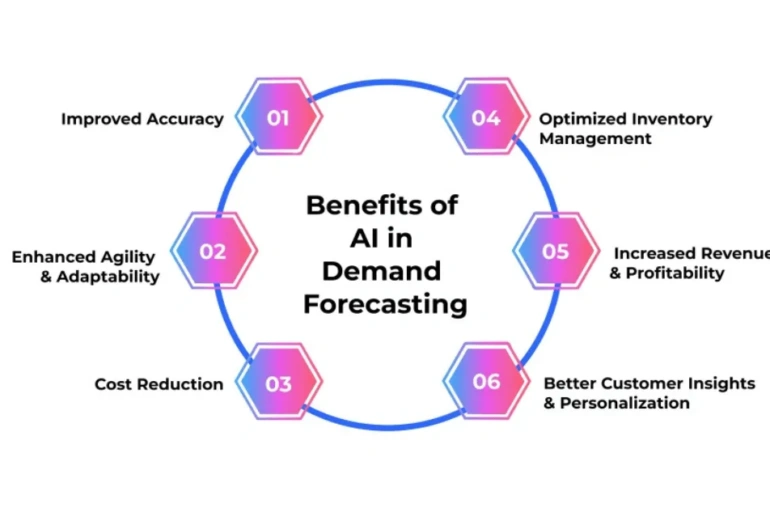
- Demand forecasting
- Personalized pricing
- Inventory management
- Customer experience
Retail efficiency gains translate directly into economic output.
AI in Transportation and Logistics
AI improves:
- Route optimization
- Fuel efficiency
- Delivery speed
- Warehouse automation
These gains reduce costs across the economy.
6. AI Is Influencing Inflation and Costs
AI has mixed effects on inflation.
On one hand:
- Automation lowers production costs
- Efficiency reduces prices over time
On the other hand:
- High-skilled labor costs rise
- AI infrastructure investment increases demand for capital
Overall, AI tends to be disinflationary in the long term.
7. AI Is Strengthening US Global Competitiveness
AI is now a strategic economic asset.
The US competes globally with China and the EU in:
- AI research
- Talent acquisition
- Commercial deployment
Institutions like the National Science Foundation play a key role in funding AI research that feeds into economic growth.
8. AI and Small Businesses in the US Economy
AI is not limited to large corporations.
Small businesses use AI for:
- Marketing automation
- Customer support
- Financial forecasting
- Process optimization
This democratization of AI increases productivity across the broader economy.
9. AI’s Impact on Entrepreneurship and Innovation
AI lowers barriers to entry for startups.
Entrepreneurs use AI to:
- Build products faster
- Analyze markets
- Reduce operating costs
This fuels innovation, startup formation, and long-term growth.
10. Risks and Challenges of AI in the US Economy
Understanding how AI is impacting the US economy also means acknowledging risks.
Key Challenges
- Job displacement in certain sectors
- Skills gaps and retraining needs
- Data privacy concerns
- Market concentration among large tech firms
Policymakers and institutions like the Federal Reserve closely monitor these dynamics.
Role of Government Policy in AI’s Economic Impact
Government policy shapes AI’s economic outcome.
Key policy areas include:
- Workforce reskilling programs
- Education reform
- AI regulation and standards
- Research and development funding
Effective policy maximizes benefits while limiting disruption.
Long-Term Economic Outlook: AI and US Growth
Most economic models suggest AI will:
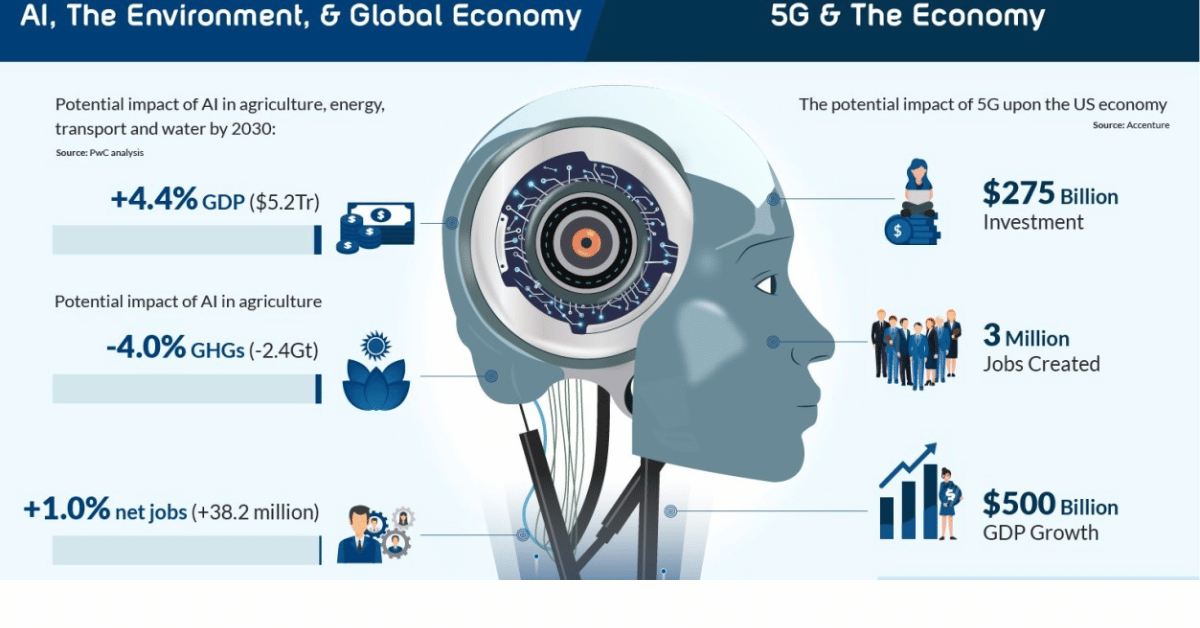
- Increase long-term GDP growth
- Improve productivity trends
- Shift job composition rather than eliminate work
The long-term effect of how AI is impacting the US economy depends on adoption speed and policy response.
Frequently Asked Questions
How is AI affecting jobs in the US economy?
AI is changing job tasks and creating new roles while reducing demand for routine work.
Is AI good or bad for the US economy?
Economically, AI is largely positive, with challenges that require policy solutions.
Will AI replace workers?
AI replaces tasks, not entire economies. Human skills remain essential.
Final Conclusion
So, how AI is impacting the US economy?
AI is increasing productivity, reshaping labor markets, driving investment, transforming industries, and strengthening long-term economic growth. While challenges exist, AI is becoming a foundational driver of US economic competitiveness.
The countries that adapt fastest to AI will lead the global economy. Right now, the US is still in that race, and AI is one of its most powerful engines.