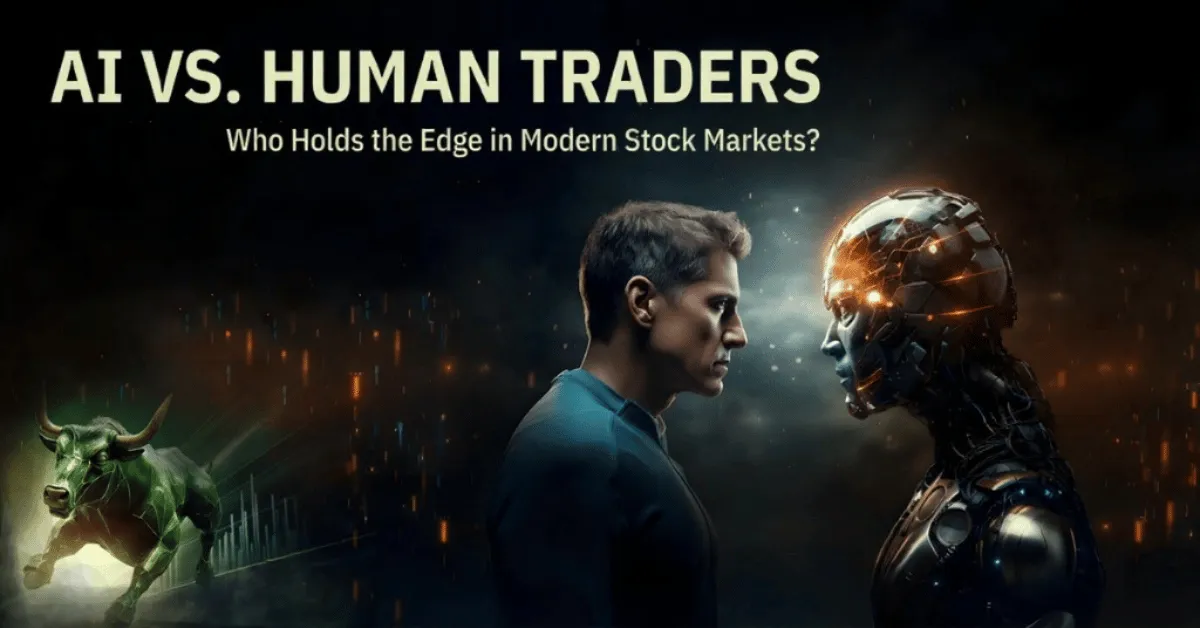
The rise of algorithmic trading, machine learning models, and automated bots has transformed currency trading. As a result, many traders ask a critical question: AI vs human traders in forex markets — who actually performs better?
The answer is not as simple as “AI wins” or “humans are better.” Forex markets reward speed, discipline, pattern recognition, and adaptability. AI and human traders each excel in different areas. Understanding those differences is the key to trading success today.
This article delivers a full, practical breakdown of AI vs human traders in forex markets, covering performance, speed, psychology, risk management, consistency, profitability, and where each approach fails.
What Are AI Traders in Forex Markets?
AI traders in forex markets use:
- Algorithms
- Machine learning models
- Automated trading bots
- Quantitative strategies
These systems analyze large volumes of price data, indicators, order flow, and sometimes news or sentiment to make trading decisions automatically.
AI trading is commonly executed through platforms such as MetaTrader, APIs, and proprietary systems used by institutions and retail traders.
Who Are Human Forex Traders?
Human traders rely on:
- Market experience
- Chart analysis
- Price action
- Fundamental analysis
- Intuition and judgment
They manually decide when to enter, manage, and exit trades. Human traders dominate discretionary trading and longer-term strategies.
Understanding AI vs human traders in forex markets starts with how each actually processes information.
AI vs Human Traders in Forex Markets: Core Differences
Let’s break this comparison down across the areas that actually matter.
1. Speed and Execution
AI Traders
- Execute trades in milliseconds
- React instantly to price changes
- Never miss an entry due to hesitation
Human Traders
- Slower reaction time
- Limited by decision-making speed
- Can miss fast-moving setups
Winner: AI
Speed is a decisive advantage for AI in forex markets.
2. Data Processing and Analysis
AI Traders
- Analyze thousands of data points simultaneously
- Detect hidden correlations
- Process multi-timeframe data instantly
Human Traders
- Can analyze only limited information at once
- Rely on selective indicators
- Miss subtle statistical patterns
Winner: AI
This is a major reason institutions rely heavily on automation.
3. Trading Psychology and Emotional Control
Psychology is where most retail traders fail.
AI Traders
- No fear or greed
- No revenge trading
- No emotional bias
Human Traders
- Fear causes early exits
- Greed leads to overtrading
- Emotions distort judgment
Winner: AI
This psychological edge is critical in AI vs human traders in forex markets.
4. Adaptability to Market Changes
Markets change. This is where things get interesting.
AI Traders
- Perform well in stable conditions
- Struggle when market regimes change
- Can overfit historical data
Human Traders
- Adapt intuitively to new conditions
- Recognize unusual market behavior
- Adjust strategy without retraining models
Winner: Human
Humans still outperform AI during sudden structural changes.
5. Risk Management and Consistency
AI Traders
- Apply risk rules perfectly
- Never break position sizing rules
- Maintain consistent execution
Human Traders
- Often violate risk rules
- Increase risk after losses
- Inconsistent execution
Winner: AI
Consistency is one of AI’s strongest advantages in forex markets.
6. Strategy Complexity and Optimization
AI Traders
- Handle complex multi-factor strategies
- Optimize parameters automatically
- Backtest thousands of scenarios
Human Traders
- Prefer simple, visual strategies
- Limited ability to optimize objectively
Winner: AI
This explains why hedge funds rely heavily on quantitative models.
7. Cost and Accessibility
AI Traders
- Require setup, data, and testing
- Some systems are expensive
- Poor bots can lose money fast
Human Traders
- Low startup cost
- Learnable without coding
- Flexible and accessible
Winner: Human
For beginners, humans have a lower barrier to entry.
Profitability: AI vs Human Traders in Forex Markets
Here’s the truth most articles avoid.
- AI does not guarantee profits
- Human traders do not automatically fail
AI Profitability
- Strong in high-frequency and rule-based strategies
- Performs best with large data and capital
- Vulnerable to regime shifts
Human Profitability
- Strong in discretionary and macro trading
- Better at interpreting fundamentals
- Struggles with discipline and consistency
There is no universal winner.
Profitability depends on strategy type, not intelligence type.
Institutional Reality: How the Pros Trade
In real markets, institutions don’t choose AI or humans.
They use both.
Banks and funds such as JPMorgan Chase use:
- AI for execution and risk
- Humans for strategy and oversight
This hybrid model dominates professional forex trading.
Hybrid Trading: The Real Winner
The most effective approach in AI vs human traders in forex markets is collaboration.
Best Hybrid Model
- AI handles execution and risk
- Humans handle strategy and adaptation
- AI filters setups, humans approve them
This combines:
- AI discipline
- Human intuition
Retail traders who adopt this approach consistently outperform those who rely on only one side.
Common Myths About AI vs Human Forex Traders
Let’s clear these up.
- AI does not replace all traders
- Humans are not obsolete
- Bots do not trade profitably without supervision
- Manual trading is not outdated
Most losses come from misuse, not the tool itself.
Which Is Better for Beginners?
Beginners Should:
- Learn manual trading first
- Understand price action and risk
- Then add AI tools gradually
Starting with AI without understanding markets often leads to losses.
Which Is Better for Advanced Traders?
Advanced traders benefit most from:
- AI-assisted execution
- Automated risk management
- Data-driven validation
At this level, AI becomes a performance multiplier.
The Future of AI vs Human Traders in Forex Markets
The future is not competition. It’s integration.
Expect:
- More AI-assisted trading
- Smarter hybrid systems
- Humans focused on decision-making
- AI focused on execution and optimization
Forex markets reward discipline + adaptability, not ideology.
Frequently Asked Questions
Is AI better than humans in forex trading?
AI is better at speed, consistency, and execution. Humans are better at adaptation and judgment.
Can AI replace human forex traders?
No. AI replaces tasks, not strategic thinking.
Should retail traders use AI?
Yes, but only as a tool, not a shortcut.
Final Verdict
So, AI vs human traders in forex markets — who wins?
AI wins at:
- Speed
- Discipline
- Data processing
- Consistency
Humans win at:
- Adaptability
- Strategic thinking
- Fundamental interpretation
The traders who win long-term don’t choose sides.
They combine both.Forex markets don’t reward intelligence alone.
They reward execution, discipline, and adaptation.