The integration of artificial intelligence and blockchain is no longer a theoretical concept. It is already happening in fragmented ways across finance, data security, supply chains, and digital infrastructure. But the real impact lies ahead. Understanding the long-term future of AI and blockchain integration requires moving beyond short-term use cases and looking at how these technologies reshape systems, incentives, and power structures over time.
AI brings intelligence, prediction, and automation. Blockchain brings trust, decentralization, and verifiable truth. Individually, they are powerful. Together, they form a foundation for a new class of digital systems that can operate autonomously, securely, and at global scale.
This article provides a deep, system-level analysis of the long-term future of AI and blockchain integration, covering technological evolution, economic impact, governance shifts, and realistic adoption timelines that most content completely avoids.
Why AI and Blockchain Are Converging Long Term
Technology integration only lasts when incentives align.
AI and blockchain are converging because:
- AI needs reliable, tamper-proof data
- Blockchain needs intelligence to scale and adapt
- Both reduce reliance on centralized intermediaries
- Both benefit from automation and trust
This alignment explains why integration is not a trend, but a structural shift.
Understanding the Complementary Roles
Before analyzing the long-term future, clarity is essential.
What AI Contributes
AI excels at:
- Pattern recognition
- Decision automation
- Prediction and optimization
- Learning from data
What Blockchain Contributes
Blockchain provides:
- Immutable records
- Decentralized trust
- Transparent verification
- Incentive-aligned coordination
The long-term future of AI and blockchain integration emerges where intelligence meets trust.
Long-Term Future of AI and Blockchain Integration: Core System Changes
Let’s examine the foundational changes this integration enables.
1. From Static Systems to Autonomous Digital Infrastructure
Today’s digital systems are reactive and human-operated.
Long-term, AI + blockchain systems will:
- Monitor themselves
- Detect threats automatically
- Adjust parameters dynamically
- Execute actions without human intervention
This leads to autonomous infrastructure rather than managed software.
2. Decentralized AI With Verifiable Integrity
One major concern with AI today is trust.
Blockchain enables:
- Verifiable AI decision logs
- Immutable training data records
- Transparent model updates
In the long-term future of AI and blockchain integration, AI systems become auditable and accountable, not black boxes.
3. Trustless Data Markets and Data Ownership
Data fuels AI, but ownership is broken.
Blockchain enables:
- User-owned data
- Permissioned access
- Verifiable data provenance
AI models trained on blockchain-verified data are more trustworthy and resistant to manipulation.
4. Intelligent Smart Contracts and Self-Learning Protocols
Smart contracts are currently static.
Long term, AI will enable:
- Adaptive smart contracts
- Context-aware execution
- Continuous optimization
On platforms like Ethereum, this evolution turns code into intelligent economic agents.
5. Financial Systems Without Manual Oversight
Finance is one of the earliest beneficiaries.
The long-term future includes:
- AI-managed liquidity
- Blockchain-secured settlements
- Automated compliance
- Real-time risk management
This reduces cost, error, and systemic risk across global finance.
6. Autonomous Governance and Decision Systems
Governance is slow and politicized.
AI and blockchain integration enables:
- Data-driven governance decisions
- On-chain voting with AI analysis
- Dynamic policy adjustments
This does not remove humans, but augments collective decision-making.
7. Scalable Security and Fraud Prevention
Security threats evolve constantly.
Long-term systems will:
- Use AI to predict attacks
- Use blockchain to preserve evidence
- Self-isolate compromised components
This creates resilient, self-defending digital ecosystems.
8. Enterprise Infrastructure Transformation
Enterprises adopt technology only when ROI is clear.
AI + blockchain enable:
- Automated audits
- Secure data sharing
- Reduced reconciliation costs
- Real-time operational insight
Companies like IBM already build toward this model in enterprise systems.
9. Decentralized AI Marketplaces
Long-term integration supports:
- Open AI model marketplaces
- Blockchain-based licensing
- Transparent revenue sharing
This breaks monopolies over AI development and deployment.
10. AI-Optimized Blockchain Scalability
Blockchain scalability remains a challenge.
AI improves long-term viability by:
- Predicting congestion
- Optimizing consensus
- Managing resource allocation
This allows blockchains to operate efficiently at global scale.
Economic Impact of Long-Term AI and Blockchain Integration
The economic implications are structural.
Key Impacts
- Lower transaction costs
- Reduced intermediary dependence
- Expanded global participation
- New digital labor markets
Economic power shifts from centralized platforms to protocol-driven systems.
Regulation and the Long-Term Outlook
Regulation lags innovation.
Over the long term:
- Governments regulate outcomes, not code
- Transparency becomes a compliance advantage
- Blockchain auditability simplifies oversight
This makes AI + blockchain systems more regulator-friendly than opaque centralized platforms.
Timeline: How This Integration Unfolds
Understanding the long-term future of AI and blockchain integration requires realistic timelines.
Short Term (1–3 Years)
- Narrow AI + blockchain use cases
- Enterprise pilots
- Security and analytics focus
Medium Term (3–7 Years)
- Intelligent smart contracts
- AI-assisted governance
- Scalable financial infrastructure
Long Term (7–15 Years)
- Autonomous digital systems
- Decentralized AI networks
- Self-governing economic protocols
This evolution is gradual, not explosive.
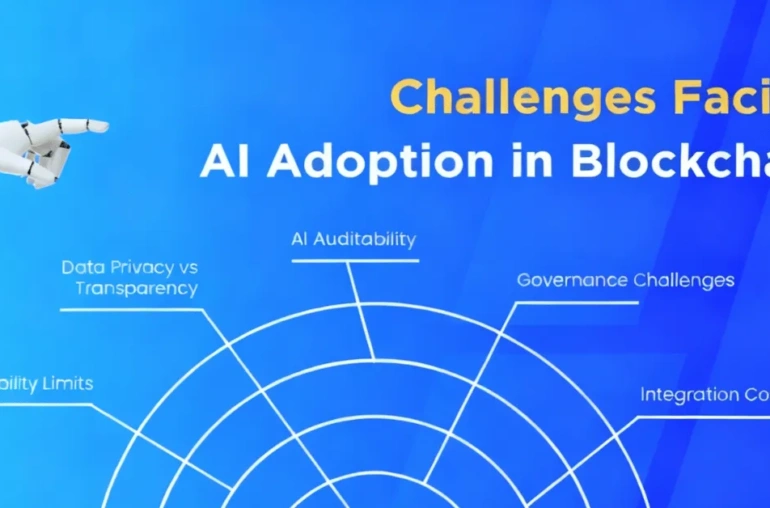
Challenges That Will Shape the Long-Term Future
No serious analysis ignores challenges.
Key Challenges
- AI model bias
- Data privacy conflicts
- Blockchain scalability
- Governance complexity
- Energy efficiency
The systems that survive will solve these problems systematically.
What Most Articles Get Wrong
Most content fails because it:
- Focuses on short-term hype
- Ignores incentives and economics
- Avoids governance complexity
- Treats integration as optional
AI and blockchain integration is not about features.
It’s about system redesign.
Frequently Asked Questions
Why is AI and blockchain integration important long term?
Because it combines intelligence with trust, enabling autonomous, secure, and scalable systems.
Will AI and blockchain replace existing systems?
They will augment and gradually replace inefficient components, not everything at once.
Is this integration realistic or speculative?
The integration is already happening. The long-term impact depends on adoption and governance.
Final Conclusion
So, what does the long-term future of AI and blockchain integration really look like?
It looks like systems that think, verify, and act without constant human supervision. It looks like trust embedded into intelligence and intelligence embedded into trust. It looks like fewer intermediaries, lower costs, and more transparent decision-making.
AI brings adaptability.
Blockchain brings truth.
Together, they create digital systems that are not just faster or smarter, but fundamentally more trustworthy.
This integration will not arrive overnight.
But once it matures, it will quietly redefine how economies, institutions, and digital societies operate.And that is why the long-term future of AI and blockchain integration is not optional.
It is inevitable.