
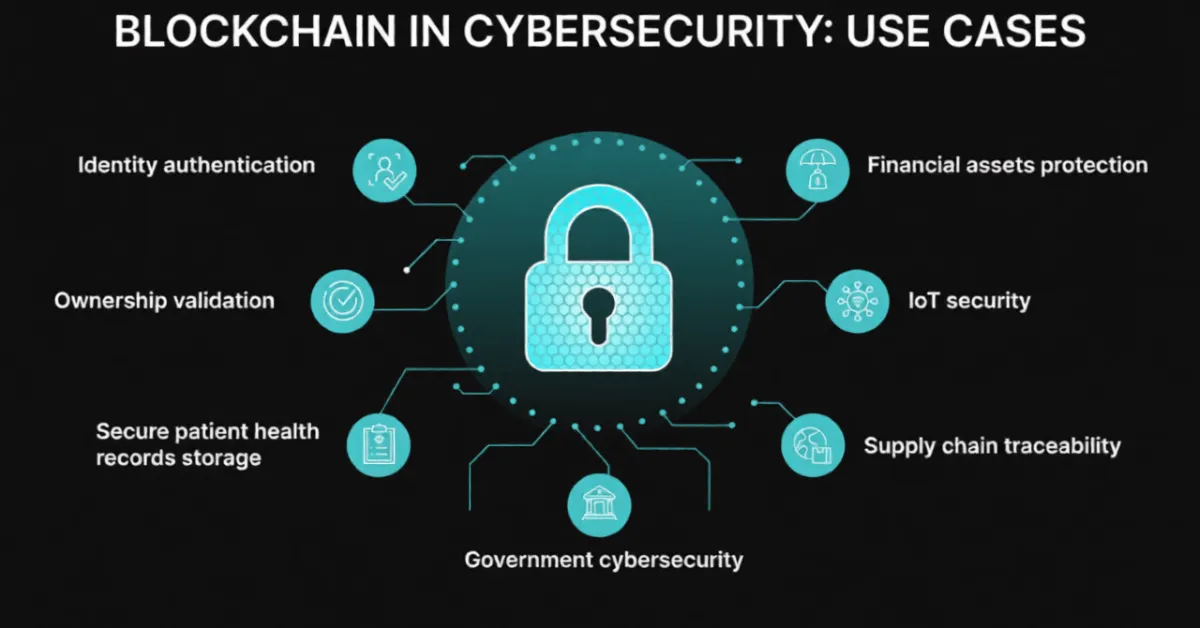
Data security has become one of the most critical challenges of the digital age. Centralized databases are breached, records are altered, and trust in digital systems continues to erode. This is where blockchain technology introduces a fundamental shift. Understanding how blockchain improves data security requires looking beyond buzzwords and into how blockchain changes the structure of data storage, access, and verification.
Blockchain does not just add encryption. It redesigns how data is recorded, shared, and protected. This article explains how blockchain improves data security by breaking down the technical, architectural, and economic mechanisms that make blockchain-based systems more secure than traditional approaches.
Why Traditional Data Security Models Are Failing
Most data today is stored in centralized systems.
These systems suffer from:
- Single points of failure
- Centralized access control
- Insider threats
- Large-scale breach risk
- Data manipulation vulnerabilities
Even with strong encryption, centralized architectures remain attractive targets for attackers. Understanding these weaknesses is key to appreciating how blockchain improves data security.
What Makes Blockchain Different From Traditional Databases
Traditional databases rely on:
- Central administrators
- Editable records
- Trust in internal controls
Blockchain replaces this with:
- Distributed ledgers
- Cryptographic verification
- Consensus-based updates
- Immutable records
This architectural shift is the foundation of blockchain-based data security.
How Blockchain Improves Data Security: Core Security Mechanisms
Let’s break down the exact mechanisms.
1. Decentralization Eliminates Single Points of Failure
One of the most important ways how blockchain improves data security is decentralization.
Blockchain stores data across:
- Thousands of independent nodes
- Multiple geographic locations
- Redundant network participants
If one node is compromised, the network remains secure. This dramatically reduces the risk of catastrophic data breaches.
2. Immutability Protects Data Integrity
Once data is recorded on a blockchain, it cannot be altered without consensus.
Immutability improves data security by:
- Preventing unauthorized changes
- Preserving historical records
- Making tampering immediately detectable
This is critical for applications where data integrity matters more than secrecy.
3. Cryptographic Hashing Secures Records
Blockchain uses cryptographic hashing to link records together.
Each block:
- Contains a hash of the previous block
- Creates a tamper-evident chain
- Ensures any modification breaks the chain
This makes undetected data manipulation computationally impractical.
4. Consensus Mechanisms Prevent Unauthorized Changes
Blockchain networks use consensus mechanisms to validate data.
Consensus ensures:
- No single actor can alter records
- Changes require network agreement
- Malicious actors are outvoted
This collective validation is a major reason how blockchain improves data security compared to centralized systems.
5. Blockchain Improves Transparency and Auditability
Security is not just about hiding data. It’s also about verifying it.
Blockchain improves security by:
- Making data changes transparent
- Allowing real-time audits
- Reducing reliance on trust
This is especially valuable in financial, healthcare, and supply chain systems.
6. Resistance to Cyber Attacks
Blockchain networks are resilient to common cyber threats.
They resist:
- DDoS attacks
- Database tampering
- Insider manipulation
- Unauthorized privilege escalation
Attacking a blockchain requires compromising a majority of the network, which is extremely costly and complex.
7. Blockchain Enhances Access Control and Identity Security
Blockchain supports decentralized identity systems.
These systems improve security by:
- Eliminating centralized identity databases
- Reducing identity theft risk
- Allowing users to control their credentials
This approach minimizes the impact of data breaches involving personal information.
8. Data Encryption Combined With Blockchain Architecture
Blockchain does not replace encryption. It enhances it.
Encrypted data on a blockchain:
- Cannot be altered
- Can be securely shared
- Maintains integrity even if accessed
Encryption protects confidentiality, while blockchain protects integrity and trust.
9. Blockchain Reduces Insider Threats
Insider threats are among the hardest security risks to manage.
Blockchain reduces insider risk by:
- Limiting unilateral control
- Recording all actions immutably
- Making misuse traceable
This accountability deters malicious behavior.
10. Smart Contracts Improve Security Automation
Smart contracts are self-executing programs stored on blockchains.
They improve security by:
- Enforcing rules automatically
- Reducing human error
- Eliminating manual intervention
Platforms like Ethereum enable secure automation without centralized oversight.
How Blockchain Improves Data Security Across Industries
The benefits of blockchain-based security apply across sectors.
Blockchain in Financial Data Security
Financial institutions use blockchain to:
- Secure transaction records
- Prevent fraud
- Improve audit trails
Organizations such as IBM develop enterprise blockchain solutions focused on data integrity and security.
Blockchain in Healthcare Data Protection
Healthcare data is highly sensitive.
Blockchain improves security by:
- Protecting medical records
- Enabling secure data sharing
- Preventing unauthorized modification
Patients gain control while data integrity is preserved.
Blockchain in Supply Chain Security
Supply chains rely on accurate data.
Blockchain improves security by:
- Preventing record tampering
- Verifying provenance
- Reducing fraud
This builds trust across complex networks.
Blockchain in Government and Public Records
Public records demand transparency and integrity.
Blockchain ensures:
- Tamper-proof records
- Transparent audits
- Reduced corruption
These properties are essential for long-term trust.
Blockchain vs Traditional Cybersecurity Approaches
Traditional Security
- Perimeter-based defense
- Centralized control
- Reactive incident response
Blockchain-Based Security
- Distributed trust
- Preventive integrity protection
- Continuous verification
This difference explains how blockchain improves data security at a systemic level.
Limitations and Misconceptions About Blockchain Security
Blockchain is powerful, but not perfect.
Key Limitations
- Data privacy depends on implementation
- Smart contract bugs can introduce risk
- Poor key management undermines security
- Scalability trade-offs exist
Blockchain improves security architecture, not careless usage.
Public vs Private Blockchains and Security
Security varies by blockchain type.
- Public blockchains maximize decentralization and transparency
- Private blockchains offer controlled access and compliance
Both can improve data security when designed correctly.
Why Blockchain Security Is About Trust, Not Just Technology
Security failures often come from broken trust models.
Blockchain improves data security by:
- Reducing trust assumptions
- Making trust verifiable
- Distributing control
This shift is more important than any single technical feature.
What Most Articles Get Wrong
Most content fails because it:
- Focuses only on encryption
- Ignores decentralization
- Overlooks insider threats
- Treats blockchain as a database
Blockchain is a security architecture, not just storage.
Frequently Asked Questions
How does blockchain improve data security?
By decentralizing storage, enforcing immutability, and using cryptographic verification.
Is blockchain completely secure?
No system is perfect, but blockchain significantly reduces many common attack vectors.
Can blockchain prevent data breaches?
It reduces breach impact by eliminating centralized targets and preventing silent tampering.
Final Conclusion
So, how blockchain improves data security?
Blockchain transforms data security by eliminating single points of failure, protecting data integrity through immutability, enforcing collective verification, and reducing reliance on centralized trust. It does not replace encryption or cybersecurity best practices. It strengthens them at the system level.
Blockchain does not just protect data.
It changes how trust is created and maintained.
In a world where data breaches are inevitable, blockchain offers something different: resilience, transparency, and verifiable security.
And that is why blockchain is becoming a foundational layer for secure digital systems.