
Cryptocurrency often gets the spotlight, but the real engine behind the entire digital asset space is blockchain technology. Without blockchain, there would be no decentralized currencies, no trustless transactions, and no global crypto ecosystem. Understanding how blockchain supports the crypto ecosystem is essential for anyone looking to grasp how crypto actually works beyond price charts and speculation.
Blockchain does more than store transactions. It provides trust, security, coordination, and economic incentives that allow cryptocurrencies and decentralized applications to function at scale. This article explains how blockchain supports the crypto ecosystem, covering technical, economic, and structural layers that most content never fully connects.
What Is the Crypto Ecosystem?
Before explaining how blockchain supports it, we need clarity on what the crypto ecosystem includes.
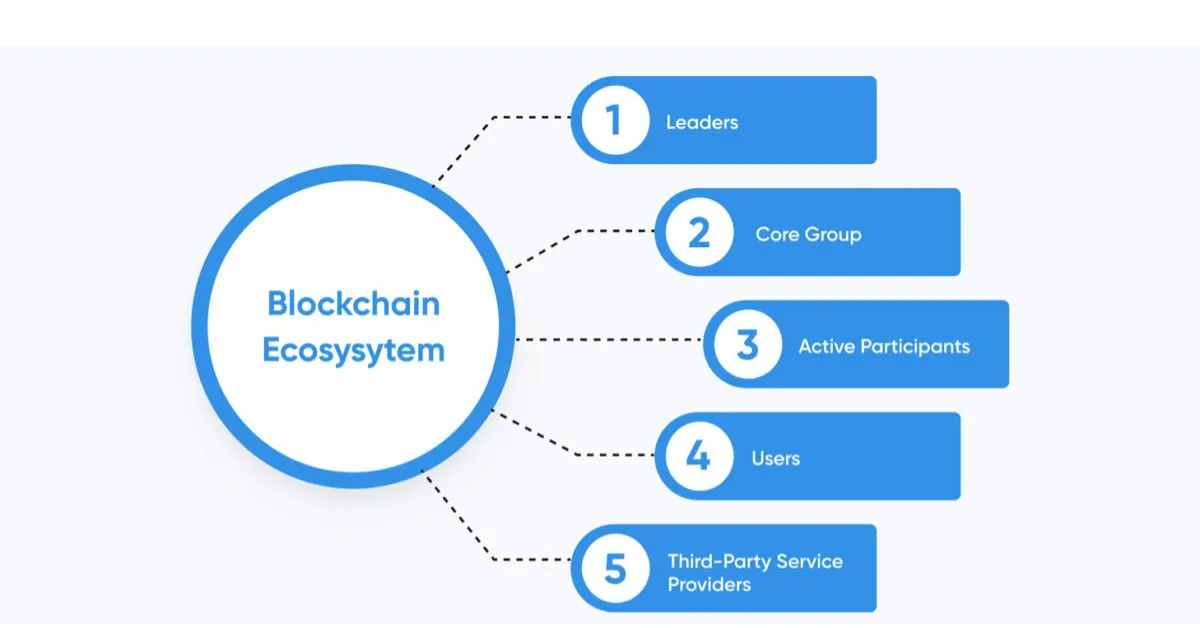
The crypto ecosystem consists of:
- Cryptocurrencies and tokens
- Blockchain networks
- Exchanges and wallets
- Decentralized finance (DeFi)
- NFTs and digital assets
- Developers, validators, and users
- Governance systems and protocols
Blockchain is the shared infrastructure that connects and secures all these components.
Why Blockchain Is Essential to the Crypto Ecosystem
The crypto ecosystem is decentralized by design. That decentralization is only possible because blockchain provides:
- A shared, tamper-resistant ledger
- Consensus without a central authority
- Transparent verification
- Incentive-based participation
This is the core of how blockchain supports the crypto ecosystem.
How Blockchain Supports the Crypto Ecosystem: Core Functions
Let’s break this down into the actual roles blockchain plays.
1. Blockchain Enables Decentralization
Decentralization is the defining feature of crypto.
Blockchain supports decentralization by:
- Distributing data across thousands of nodes
- Removing reliance on central intermediaries
- Allowing peer-to-peer transactions
This structure prevents single points of failure and censorship, which is fundamental to the crypto ecosystem.
2. Blockchain Provides Trust Without Intermediaries
Traditional finance relies on trust in institutions.
Blockchain replaces institutional trust with:
- Cryptographic verification
- Transparent transaction records
- Immutable data
Participants do not need to trust each other. They trust the blockchain protocol itself. This trust layer is a central reason how blockchain supports the crypto ecosystem at scale.
3. Blockchain Secures the Crypto Ecosystem
Security is non-negotiable in digital finance.
Blockchain supports crypto security through:
- Cryptographic hashing
- Distributed consensus mechanisms
- Tamper-resistant ledgers
Once transactions are recorded, altering them becomes computationally impractical. This protects assets, records, and ownership.
4. Blockchain Enables Native Digital Assets
Cryptocurrencies are not just numbers in databases.
Blockchain allows:
- Native digital scarcity
- Verifiable ownership
- Permissionless asset creation
Networks like Bitcoin demonstrate how blockchain enables a decentralized, censorship-resistant form of money.
5. Blockchain Supports Transparency and Auditability
Transparency is a major advantage of crypto.
Blockchain supports transparency by:
- Making transactions publicly verifiable
- Allowing real-time auditing
- Reducing hidden manipulation
This transparency builds confidence and accountability across the crypto ecosystem.
6. Blockchain Enables Smart Contracts and Automation
Smart contracts are self-executing code stored on blockchains.
Blockchain supports smart contracts by:
- Enforcing rules automatically
- Eliminating manual intermediaries
- Reducing operational costs
Platforms like Ethereum use smart contracts to power decentralized finance, NFTs, and decentralized applications.
7. Blockchain Powers Decentralized Finance (DeFi)
DeFi is one of the strongest examples of how blockchain supports the crypto ecosystem.
Blockchain enables DeFi by:
- Allowing permissionless access
- Enforcing financial logic via smart contracts
- Enabling global liquidity pools
Without blockchain, decentralized lending, trading, and yield protocols would not be possible.
8. Blockchain Supports Tokenization and NFTs
Blockchain makes digital ownership possible.
Through tokenization, blockchain supports:
- NFTs and digital collectibles
- Tokenized real-world assets
- Digital identity systems
Ownership is provable, transferable, and verifiable without intermediaries.
9. Blockchain Aligns Incentives Through Token Economics
The crypto ecosystem runs on incentives.
Blockchain supports economic coordination by:
- Rewarding validators and miners
- Incentivizing honest participation
- Penalizing malicious behavior
Token economics align individual incentives with network health, a key reason crypto systems scale organically.
10. Blockchain Enables Global, Permissionless Participation
Crypto is global by default.
Blockchain supports global participation by:
- Operating without borders
- Requiring no central approval
- Allowing anyone with internet access to participate
This inclusivity is unmatched by traditional financial systems.
Blockchain and Governance in the Crypto Ecosystem
Governance determines how crypto systems evolve.
Blockchain supports governance through:
- On-chain voting
- Transparent proposals
- Community-driven decision-making
Decentralized governance allows protocols to adapt without centralized control.
Blockchain Improves Resilience and Fault Tolerance
Centralized systems fail catastrophically.
Blockchain supports resilience by:
- Distributing infrastructure globally
- Allowing networks to survive node failures
- Preventing single points of attack
This resilience strengthens the entire crypto ecosystem.
Blockchain and Interoperability
Modern crypto ecosystems involve multiple blockchains.
Blockchain supports interoperability through:
- Cross-chain bridges
- Shared standards
- Layered architectures
This allows value and data to move across networks, expanding ecosystem utility.
Scalability and the Evolution of Blockchain Support
Early blockchains faced scalability challenges.
New solutions include:
- Layer 2 scaling
- Sidechains
- Sharding
These innovations improve how blockchain supports the crypto ecosystem as adoption grows.
Economic Impact of Blockchain on the Crypto Ecosystem
Blockchain reduces costs by:
- Eliminating intermediaries
- Automating verification
- Increasing efficiency
This economic efficiency is why crypto services can operate globally with minimal overhead.
Risks and Limitations of Blockchain Support
No system is perfect.
Blockchain faces challenges such as:
- Scalability limits
- Energy consumption
- Governance complexity
- User experience barriers
Understanding these limits is essential for realistic adoption.
Why Blockchain Still Matters Despite Challenges
Despite limitations, blockchain remains irreplaceable because it uniquely combines:
- Trust
- Transparency
- Security
- Decentralization
No existing technology replicates this combination at scale.
What Most Articles Get Wrong
Most content fails because it:
- Explains blockchain technically but not economically
- Ignores incentives and governance
- Separates crypto from its infrastructure
- Focuses only on prices
Blockchain is not an accessory to crypto.
It is the foundation.
Frequently Asked Questions
How does blockchain support cryptocurrency?
Blockchain provides the decentralized ledger, security, and consensus that allow cryptocurrencies to exist.
Can crypto exist without blockchain?
Not in its decentralized form. Blockchain is essential for trustless systems.
Why is blockchain important for the crypto ecosystem?
It enables security, transparency, decentralization, and global participation.
Final Conclusion
So, how blockchain supports the crypto ecosystem?
Blockchain provides the trust layer, security framework, incentive structure, and coordination mechanism that allow cryptocurrencies and decentralized applications to function without centralized control. It secures assets, automates rules, aligns incentives, and enables global participation.
Crypto is what users see.
Blockchain is what makes it possible.As the crypto ecosystem evolves, blockchain will continue to adapt, scale, and improve. But its core role will remain the same: supporting a decentralized, transparent, and resilient digital economy.